
From Ikigai to Wabi-Sabi: 10 Japanese Concepts for a Happier Life
In today's fast-paced world, many people struggle with stress, comparison, burnout, and the constant pressure to achieve more. While modern self-help books offer countless solutions, some of the most profound lessons about happiness have existed for centuries. Japan, a country known for its rich traditions and mindful way of living, has developed philosophies that help people find purpose, peace, gratitude, and balance.
These Japanese Concepts for a Happier Life are not complicated theories. They are practical mindsets that can be applied to everyday living. From discovering your life's purpose through Ikigai to accepting imperfection with Wabi-Sabi, these concepts encourage a slower, more meaningful approach to life.
Whether you are looking for personal growth, emotional well-being, or simply a fresh perspective, these timeless Japanese philosophies can help you create a happier and more fulfilling life.
Why Japanese Philosophy Matters Today
Japanese philosophy focuses less on chasing perfection and more on appreciating life's journey. Instead of seeking happiness as a future destination, it teaches us to find contentment in the present moment.
Many people searching for Japanese concepts for life, 7 Japanese principles of life, or 10 Japanese concepts to improve life are often surprised to discover how relevant these ancient teachings remain in modern society.
Let's explore ten powerful concepts that can transform the way you think, work, and live.
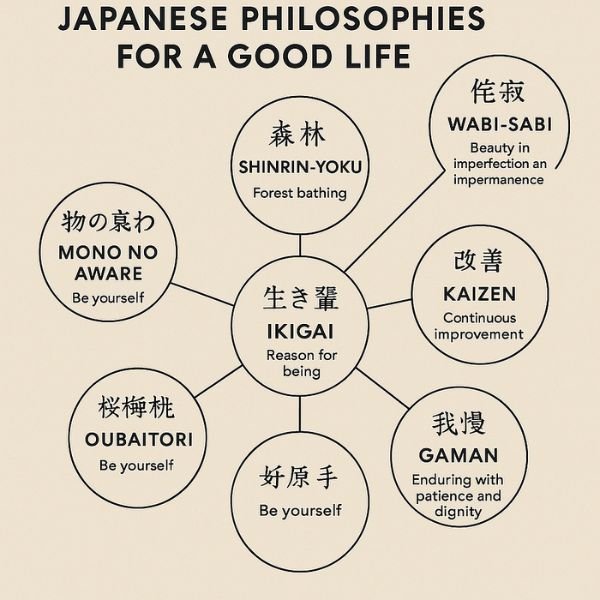
1. Ikigai (生き甲斐) – Find Your Reason for Being
Perhaps the most famous Japanese philosophy, Ikigai means "reason for being."
It represents the intersection of:
- What you love
- What you are good at
- What the world needs
- What you can be rewarded for
People who discover their Ikigai often wake up with a sense of purpose and direction.
How to Apply Ikigai
- Identify activities that make you lose track of time.
- Reflect on what gives your life meaning.
- Explore ways to combine passion and contribution.
- Remember that your Ikigai doesn't have to be your profession.
A meaningful hobby, family role, or creative pursuit can also become your Ikigai.
Read More -: https://youtube.com/shorts/8YBOXjBKyFI?si=8yrWeAYAOZHbMVjl
2. Wabi-Sabi (侘寂) – Embrace Imperfection
Modern society often encourages perfectionism. Wabi-Sabi teaches the opposite.
This philosophy celebrates beauty in imperfection, simplicity, and the natural aging process.
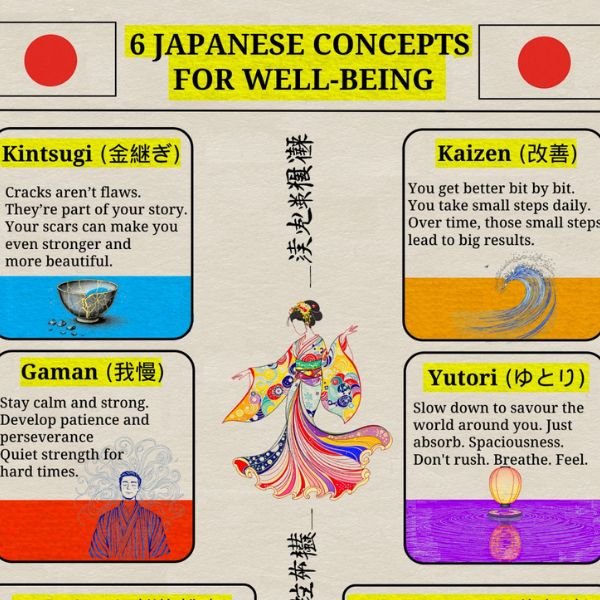
A cracked ceramic bowl repaired with gold through the art of Kintsugi is considered more beautiful because of its imperfections.
How to Apply Wabi-Sabi
- Accept mistakes as part of growth.
- Stop waiting for perfect conditions.
- Appreciate old possessions and experiences.
- Recognize beauty in life's imperfections.
Wabi-Sabi reminds us that we do not need to be perfect to be valuable.
3. Kaizen (改善) – Continuous Improvement
Among the most practical Japanese concepts for a happier life, Kaizen focuses on small, consistent improvements.
Instead of making drastic changes, Kaizen encourages improving by just 1% every day.
Over time, these small improvements create extraordinary results.
How to Apply Kaizen
- Read one page daily.
- Exercise for five minutes consistently.
- Learn one new skill every week.
- Improve one habit at a time.
The key is progress, not perfection.
4. Ichigo Ichie (一期一会) – Treasure Every Moment
Ichigo Ichie translates to "one time, one meeting."
This concept teaches that every moment is unique and can never be repeated exactly the same way again.
It encourages presence and mindfulness.
How to Apply Ichigo Ichie
- Put away distractions during conversations.
- Be fully present with family and friends.
- Appreciate ordinary experiences.
- Treat every interaction as special.
Life becomes richer when we truly experience it instead of rushing through it.
5. Oubaitori (桜梅桃李) – Everyone Blooms in Their Own Time
Comparison is one of the greatest sources of unhappiness.
Oubaitori teaches that every person has a unique path, just as different flowers bloom at different times.
Cherry blossoms, plum blossoms, peaches, and apricots all flourish differently.
How to Apply Oubaitori
- Stop comparing your journey to others.
- Focus on personal growth.
- Celebrate your unique strengths.
- Respect different life timelines.
Your success does not need to look like anyone else's.
6. Shikata Ga Nai (仕方がない) – Accept What You Cannot Control
Some situations simply cannot be changed.
Shikata Ga Nai means "it cannot be helped."
This philosophy encourages acceptance rather than endless frustration.
How to Apply Shikata Ga Nai
- Distinguish between what you can control and what you cannot.
- Let go of unnecessary worry.
- Focus your energy on solutions.
- Move forward with resilience.
Acceptance creates emotional freedom.
7. Chisoku (知足) – Know What Is Enough
Modern culture often promotes endless striving.
Chisoku teaches that true happiness comes from appreciating what you already have.
It is the art of contentment.
How to Apply Chisoku
- Practice daily gratitude.
- Appreciate simple pleasures.
- Avoid unnecessary comparison.
- Focus on abundance rather than scarcity.
Contentment does not mean giving up ambition. It means enjoying the present while pursuing the future.
8. Shoshin (初心) – Maintain a Beginner's Mind
Experts often become trapped by assumptions.
Shoshin encourages approaching life with curiosity, openness, and a willingness to learn.
How to Apply Shoshin
- Ask questions.
- Stay curious.
- Be open to new experiences.
- Avoid assuming you already know everything.
A beginner's mindset keeps life exciting and encourages lifelong learning.
9. Mono No Aware (物の哀れ) – The Beauty of Impermanence
Mono No Aware refers to an awareness that everything is temporary.
The beauty of cherry blossoms lies partly in the fact that they bloom for only a short time.
This concept encourages appreciation for life's fleeting moments.
How to Apply Mono No Aware
- Appreciate relationships while they exist.
- Enjoy beautiful moments without trying to hold onto them forever.
- Accept change as a natural part of life.
- Practice gratitude daily.
Understanding impermanence makes every experience more meaningful.
10. Mottainai (もったいない) – Respect and Avoid Waste
Mottainai expresses regret over waste and encourages respect for resources.
This philosophy extends beyond physical objects to include time, talent, opportunities, and relationships.
How to Apply Mottainai
- Reduce unnecessary consumption.
- Use resources mindfully.
- Value your time.
- Develop your talents fully.
Living with Mottainai encourages gratitude and responsibility.
Read More -: 7 small Japanese Habits that will bring Happiness into Your Life
Additional Japanese Techniques for Self Improvement
Beyond these ten philosophies, many people also explore:
- Hara Hachi Bu (eat until 80% full)
- Ganbatte (always do your best)
- Ma (the power of pauses and silence)
- Zanshin (remaining present and aware)
Together, these ideas form a powerful Japanese philosophy list that supports both personal growth and emotional well-being.
How to Start Living by These Japanese Concepts
You do not need to adopt all ten philosophies at once.
Choose one concept that resonates with your current situation.
For example:
- Feeling lost? Start with Ikigai.
- Struggling with perfectionism? Practice Wabi-Sabi.
- Seeking productivity? Apply Kaizen.
- Comparing yourself to others? Remember Oubaitori.
- Facing uncertainty? Embrace Shikata Ga Nai.
Small changes often create the most lasting transformation.
Conclusion
The beauty of these Japanese Concepts for a Happier Life lies in their simplicity. They do not demand dramatic lifestyle changes or expensive programs. Instead, they invite us to view life through a different lens—one that values purpose, gratitude, acceptance, growth, and presence.
Whether it is finding meaning through Ikigai, embracing imperfection with Wabi-Sabi, improving steadily through Kaizen, or appreciating every moment through Ichigo Ichie, each philosophy offers a practical pathway toward greater happiness.
In a world filled with noise and pressure, these timeless Japanese teachings remind us that fulfillment is often found not in having more, but in appreciating what is already here.
Frequently Asked Questions About Japanese Concepts for a Happier Life
1. What is the Japanese philosophy for a happy life?
The Japanese philosophy for a happy life focuses on living with purpose, gratitude, balance, and mindfulness. Concepts such as Ikigai, Wabi-Sabi, and Kaizen encourage individuals to appreciate the present moment while continuously growing. Rather than chasing perfection, Japanese philosophies emphasize finding joy in everyday experiences. These timeless teachings help create a more meaningful and fulfilling life.
2. What are the 7 principles of Japan?
The commonly referenced 7 Japanese principles of life include Ikigai (purpose), Kaizen (continuous improvement), Wabi-Sabi (embracing imperfection), Shoshin (beginner's mind), Chisoku (contentment), Mottainai (respect for resources), and Ichigo Ichie (treasuring every moment). Together, these principles encourage self-growth, gratitude, and inner peace. Many people adopt these philosophies to improve their daily lives and mental well-being.
3. What are some real Japanese habits for a happy life?
Many Japanese people practice habits such as expressing gratitude, eating mindfully, staying physically active, maintaining strong community connections, and embracing lifelong learning. Concepts like Hara Hachi Bu encourage moderation, while Ichigo Ichie promotes mindfulness during daily interactions. These habits contribute to a healthier and more balanced lifestyle. Small, consistent actions often lead to long-term happiness.
4. What are the 7 principles of Wabi-Sabi?
The seven principles often associated with Wabi-Sabi include simplicity, asymmetry, naturalness, tranquility, humility, impermanence, and authenticity. These principles encourage people to appreciate imperfections and the natural flow of life. Wabi-Sabi teaches that beauty exists in things that are incomplete, aging, or imperfect. It offers a refreshing alternative to modern perfectionism.
5. What are the 4 pillars of Japanese philosophy?
The four pillars commonly linked to Japanese philosophy are purpose (Ikigai), acceptance (Wabi-Sabi), continuous improvement (Kaizen), and mindfulness (Ichigo Ichie). These concepts help individuals create balance in their personal and professional lives. Together, they encourage a deeper appreciation for life and personal growth. Many modern self-improvement practices are inspired by these principles.
6. Why is Gen Z so obsessed with Japan?
Gen Z is attracted to Japan because of its unique blend of tradition and innovation. Japanese culture offers meaningful philosophies, minimalistic lifestyles, anime, technology, and a strong sense of identity. Many young people find concepts like Ikigai and Kaizen relevant to their search for purpose and self-improvement. Japan's focus on mindfulness and authenticity resonates strongly with today's generation.
7. How can Japanese Concepts for a Happier Life improve mental well-being?
These philosophies help reduce stress by encouraging acceptance, gratitude, and mindful living. Concepts like Shikata Ga Nai teach people to let go of things beyond their control, while Chisoku promotes contentment with what they already have. Practicing these ideas can improve emotional resilience and reduce feelings of anxiety. Over time, they contribute to a more positive mindset.
8. Which Japanese concept is best for self-improvement?
Kaizen is widely considered one of the best Japanese techniques for self improvement. It focuses on making small, consistent improvements rather than attempting drastic changes. This approach helps build sustainable habits and prevents burnout. By improving just a little each day, significant progress can be achieved over time.
9. Can Japanese philosophies be applied in modern life?
Yes, Japanese philosophies are highly practical and can be applied to modern lifestyles. Whether you are managing a career, studies, relationships, or personal goals, concepts like Ikigai, Kaizen, and Wabi-Sabi provide valuable guidance. Their simplicity makes them easy to incorporate into daily routines. Even small changes can have a meaningful impact on overall happiness.
10. Which Japanese concept should beginners start with?
For most beginners, Ikigai is an excellent starting point because it helps identify personal purpose and direction. Once a sense of purpose is established, concepts like Kaizen and Wabi-Sabi can be integrated into daily life. The key is to focus on one philosophy at a time rather than trying to adopt everything at once. Consistent practice leads to lasting benefits and a happier life.
Final Thought
Happiness is rarely created through a single breakthrough. More often, it grows through small daily choices, meaningful habits, and a deeper understanding of ourselves.
These Japanese concepts for life have guided generations toward balance and inner peace. Perhaps one of them is exactly what you need today.
Start with one concept.
Practice it for a week.
Allow it to quietly change the way you see your life.
You may discover that happiness was never something you had to chase—it was something you simply needed to notice.
Ganbatte! (Good luck!)